
China Top 10 Ice Chest Cooler Box Set Manufacturers?
Choosing a reliable supplier matters when an Ice Chest Cooler Box Set must perform beyond a product photograph. China has a broad manufacturing base, from established export factories to smaller specialists with flexible production lines. This article introduces ten manufacturers associated with cooler boxes, insulated containers, and outdoor storage solutions. It considers their product range, material choices, customization options, production experience, and export support.
The evaluation focuses on practical evidence. Important details include insulation thickness, gasket quality, hinge strength, drainage design, handle comfort, and temperature-retention testing. Factory certifications, quality-control procedures, sample policies, and communication standards also deserve attention. A polished catalog is not enough. Buyers should request samples, inspect closure alignment, and confirm performance under realistic transport conditions. Small differences become obvious when a cooler sits in a hot vehicle or carries wet ice for several hours.
No ranking is flawless. Supplier capabilities can change with new equipment, staff, or raw-material sources. Some public information may also remain incomplete. That limitation should be acknowledged, not hidden. Our approach combines manufacturer information, buyer-focused comparison points, and practical sourcing experience. It aims to help importers, retailers, hospitality businesses, and outdoor brands ask better questions before placing an order. The final choice should reflect volume, budget, target market, packaging needs, and expected use. A dependable partner is not always the cheapest one. Sometimes, the quiet factory with careful samples deserves a closer look.
What Defines a High-Quality Ice Chest Cooler Box Set Manufacturer?
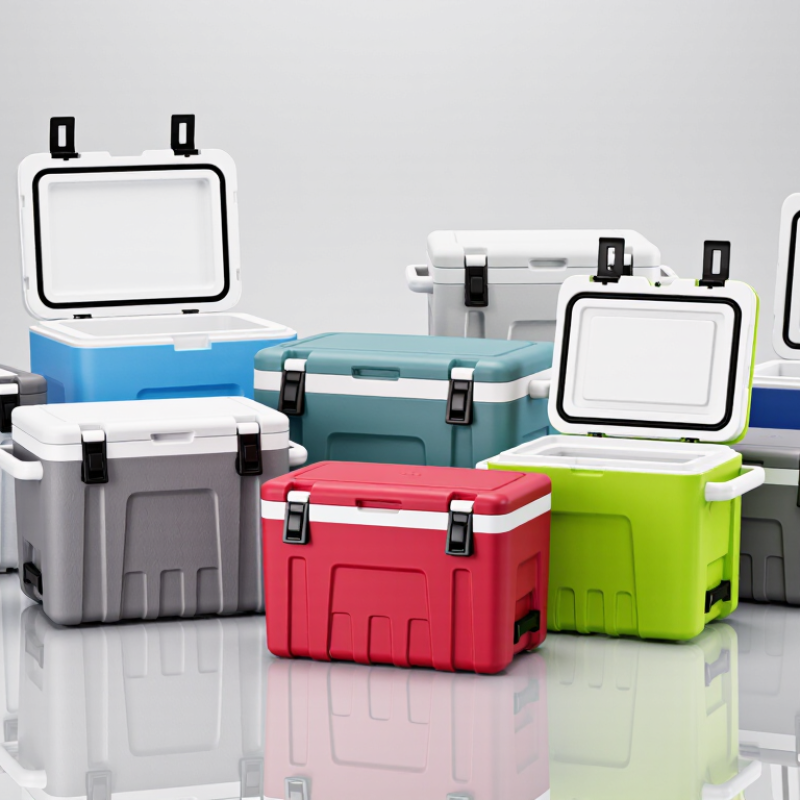
A high-quality ice chest cooler box set begins with verified performance, not glossy product photos. The Outdoor Industry Association reported 175.8 million U.S. participants in outdoor recreation in 2022. That demand raises practical expectations: stable cooling, reliable handles, and easy cleaning. A serious manufacturer should publish test conditions, including ambient temperature, ice load, opening frequency, and test duration. Without those details, “keeps ice for three days” means very little.
Food safety also matters. The U.S. Department of Agriculture advises keeping perishable food below 40°F (4.4°C). Therefore, manufacturers should test internal temperature, not only remaining ice. Thick, evenly molded insulation, tight lid compression, durable hinges, and leak-resistant drainage are important indicators. A complete set may include dividers, baskets, reusable cold packs, and secure tie-down points. Materials should have traceable specifications and food-contact documentation where applicable.
Manufacturing experience appears in small details. Corners should resist impact. Latches should work with wet hands. Seams should not trap dirt. Independent laboratory testing improves credibility, especially when results are linked to recognized quality procedures. Still, no cooler performs identically in every climate. A high-quality supplier should admit that limitation. Some published tests remain too controlled, and real beach or campsite use can expose weaknesses. That honesty is more useful than an impressive promise.
China Top 10 Ice Chest Cooler Box Set Manufacturers? - What Defines a High-Quality Ice Chest Cooler Box Set Manufacturer?
The following comparison ranks the ten most important manufacturer capability areas for evaluating ice chest cooler box sets. It uses measurable product, material, testing, and production criteria rather than company or brand information.
| Rank | Manufacturer Capability Area | Recommended Quality Benchmark | How Buyers Can Verify It | Why It Matters |
|---|---|---|---|---|
| 1 | Thermal Retention Performance | The finished cooler should have documented cold-retention test results under stated conditions, including ambient temperature, ice or cold-pack loading, test duration, and internal temperature readings. | Request a laboratory report or internal test record with test conditions, measurement intervals, sample size, and pass/fail criteria. Results should be compared using the same test method. | Directly affects food safety, beverage temperature, and user satisfaction. |
| 2 | Insulation Construction | High-quality designs generally use continuous closed-cell foam insulation with controlled thickness and minimal thermal bridges around seams, hinges, handles, and drain openings. | Review cross-sectional samples, insulation thickness records, foam-density specifications, and production inspection procedures. | Consistent insulation reduces heat transfer and improves cooling efficiency. |
| 3 | Food-Contact Material Compliance | Interior liners, gaskets, containers, and other food-contact components should be made from materials supported by applicable food-contact compliance documentation, such as relevant FDA or EU requirements. | Ask for material declarations, supplier compliance statements, migration-test reports where applicable, and traceable resin or elastomer specifications. | Supports safe storage of food and beverages and reduces regulatory risk. |
| 4 | Lid Seal and Closure System | The lid should close evenly, maintain gasket compression around the full perimeter, and resist leakage when the cooler is tilted or transported. | Conduct water-leak tests, repeated opening-and-closing tests, gasket-compression checks, and visual inspections of hinge and latch alignment. | Prevents cold-air loss, water leakage, and premature gasket failure. |
| 5 | Impact and Drop Durability | The product should be tested for drops, corner impacts, lid impacts, and repeated handling without cracking, loss of seal, or functional failure. | Request a documented drop or distribution test plan based on the intended shipping method, product weight, packaging, and expected handling conditions. | Protects the cooler during logistics, outdoor use, and repeated loading. |
| 6 | Drain, Plug, and Hardware Reliability | Drain plugs, hinges, handles, wheels, and fasteners should be corrosion-resistant, securely attached, easy to replace, and compatible with the cooler’s intended load. | Inspect hardware materials, thread quality, attachment points, replacement-part availability, and results from repeated-use or load testing. | Hardware failures are common causes of leakage, inconvenience, and product returns. |
| 7 | UV and Weather Resistance | Exterior plastics, coatings, labels, and elastomers should be selected for the expected exposure to sunlight, moisture, temperature changes, and outdoor chemicals. | Review material specifications and accelerated-weathering data, and inspect samples for color change, brittleness, surface cracking, or loss of flexibility. | Improves service life for camping, fishing, marine, and outdoor applications. |
| 8 | Dimensional and Production Consistency | Critical dimensions such as lid fit, gasket channel, wall thickness, internal capacity, drain opening, and handle position should remain within documented production tolerances. | Request inspection reports, control plans, first-article measurements, sample approval records, and batch-to-batch dimensional data. | Consistent production helps maintain the same performance across large purchase orders. |
| 9 | Tooling and Customization Capability | A capable manufacturer should be able to manage product drawings, 3D files, color standards, logo applications, packaging requirements, and engineering changes under controlled procedures. | Review tooling ownership terms, mold-maintenance plans, approved samples, color-control methods, prototype lead times, and engineering-change records. | Reduces specification errors and supports reliable private-label or custom programs. |
| 10 | Quality Management and Traceability | Production should include incoming-material inspection, in-process checks, final inspection, nonconformance handling, corrective actions, and batch or lot traceability. | Request quality manuals, inspection checklists, corrective-action examples, calibration records, audit results, and sample inspection reports. | Creates repeatable quality and makes defects easier to identify and correct. |
Note: Actual performance depends on cooler size, insulation design, materials, loading method, ambient conditions, and test protocol. Buyers should compare manufacturers using identical specifications and documented test conditions.
Related Posts
-
How to Choose the Best Ice Chest Cooler Box Set for 2026?
-

China Best Ice Cooler Box Reviews and Buying Guide for Ultimate Refreshment?
-
How to Choose the Best Ice Box Cooler Storage for Your Needs?
-
Essential Tips for Choosing the Best Ice Cooler Box With Wheels?
-
How to Use a Popsicle Cooler Box for Perfect Summer Treats?
-
Why You Should Choose an Ice Box Freezer for Your Food Storage Needs?